
When You Kill Your Ex-Boyfriend
by Brooksie C. Fontaine / August 30, 2026 / Fiction / !!!!
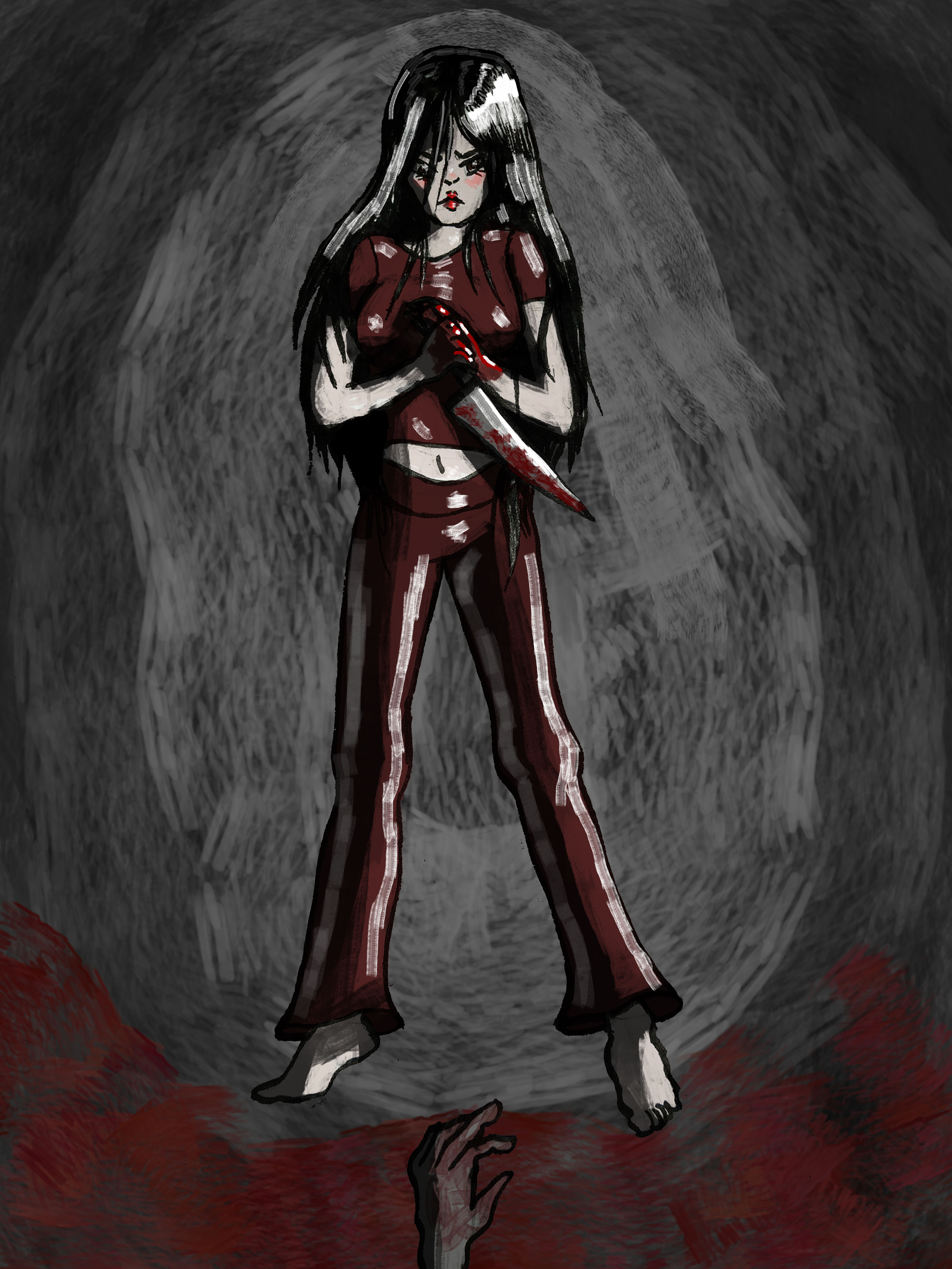
© Brooksie C. Fontaine
When you kill your ex-boyfriend, everyone asks if you feel guilty.
They ask it in different ways.
“Is it hard to carry the weight of…”
“Is there any sense of remorse for…”
“Do you ever regret…”
“His family…”
Because of the circumstances in which you killed him, they feel inclined to tiptoe around it. It makes them uncomfortable if you don’t feel guilty, but they can’t say that.
Everyone agrees you had to do it, even the police. It didn’t even go to trial.
After it happened, there was a sense of relief from the police standing around. Not exactly relief, that was too strong a word. A sense of, “Well, that’s done.”
You want to believe they were glad for you, and maybe they were. But you’d also made quite a nuisance of yourself over the past two years.
With every report, with every visit from a patrol car, with every trip to the station, there was that growing sense that police were getting tired of you, that they’d rather not drive all the way out there this time of night, that they’d rather not take down another report, even though it’s what they told you to do, even though it’s all you really can do. To record it, so when he does something, they know who to arrest.
It’s like receiving a scary diagnosis. When you had to get part of your cervix removed, and the doctors told you they weren’t sure if it was cancerous or just precancerous – the way the doctor talked, that’s what it reminded you of, sort of. For you, it was the scariest day of your life. For him, it was a work day.
His caring was muscle memory, not visceral. He had no reason to care about you. He didn’t even know you. You can’t expect people who don’t know you to care about you, even if it’s their job.
It was a little different, of course. With the doctor, that only happened once. With the police, it happened again, and again, till you’d lost count. You had to keep coming back to them, like you wanted attention, like you wanted to inconvenience them. You struggled with it. You weren’t raised to take up space.
You also weren’t raised to ignore problems. You were raised to deal with them.
The feeling of powerlessness was as frustrating as it was terrifying. When he admitted to cheating on you, and giving you the HPV virus that nearly gave you cancer – it could only have been him, you’d never been with anyone else, not all the way, you were high school sweethearts, ever-so-wholesome, it was why you stayed with him so long, it was all you’d known. But he’d nearly killed you. This time, you said that you didn’t want to work it out, you wanted him to go.
“I’m not leaving,” he said.
And he didn’t. Not until you screamed so loud the neighbors all up and down the block must have heard, and he had to run out the front door in case someone called the police. No one did, not even you. You picked up the toppled furniture, thinking it was over. It wasn’t over.
He kept coming back. Parked outside your house at 2AM. Strange calls to your work, threatening calls to your family members. You double-padlocked your doors, you got used to never leaving the house at night, not even to put out the trash; to living in fear.
It became a pattern of wearing you down, interspersed every few months with attempts at reconciliation. You recorded everything. Every threatening email, every social media message from some anonymous throwaway account, everything he said he’d do to you.
“Alright,” you finally said, when he called you from some new phone number. “Let’s just talk. I’m so tired. Maybe we can work this out.”
Before he came in, you knocked over the coffee table, the chairs. You broke a mug full of coffee, one you didn’t like all that much.
Then you waited by the door, with your back pressed to the wall. Your heart beat so hard it made you dizzy. The trigger of the pellet gun was greasy under your finger tip. (“It was just a precaution,” you’d say later. “I kept it to defend myself.”)
The door opened, and he saw the trashed room before he saw you. You screamed – screamed loud enough that the neighbors would hear it. “NO! NO, PLEASE!” You’d tell the police he attacked you first.
He looked at you, flinching in shock, like he was the one with something to fear. Coincidentally, that was now true.
You shot him in the chest with the pellet gun, and he staggered back like he’d been electrocuted. You shot him again, and he fell, a toppled monument.
Then you were on top of him with your father’s hunting knife, straddling him like when you used to make love, back when the love outweighed what he did to you, how he acted when he was drunk.
(“I had to defend myself,” you’d say later. “I never wanted it to come to this.”)
“Please,” he gasped, with his dying breaths. “I’m sorry.”
He always used to say he was sorry. He used to cry when he sobered up and remembered he hit you.
You weren’t sorry. You’re still not sorry.
Each thrust of the knife is an answer to the questions you’ll be asked.
“Is it hard to carry the weight of…”
No.
“Is there any sense of remorse for…”
No.
“Do you ever regret…”
No.
“His family…”
Are not my responsibility, any more than.
No, you’re not guilty.
No, you’re not sorry.
The knife plunged in.
No.
The knife came out, bloody as a pulled tooth.
No.
In.
No.
Out.
No.
No.
No.
Brooksie C. Fontaine is an author, illustrator, and obnoxious coffee addict with 50+ publications, two MFAs, and a Wigleaf nod!