
The Tomb-Burner of Oak Point
by Nathaniel G. Moore
July 12, 2026 | Fiction | Tomb-Burner
The law in New Brunswick requires twelve months of documented separation before the gears of a divorce can actually turn. A year of holding entirely still to prove you are no longer connected to the architecture you helped pay for. By the middle of May, the cherry blossoms begin falling from their branches across the three-quarter-acre lot in Oak Point. They drop in heavy, silent drifts, coating the high grass like low-budget snow.
How I got here follows a line that looks straight only after you’ve finished walking it. The root of it is the strangest transaction: a marriage that lasted over a decade, surviving the expensive weight of British Columbia before collapsing into the soil of Fredericton. We spent months failing to communicate, living inside the same rooms like two people waiting for a train that had already passed. On separate occasions, both of us ran crying to the local cemetery—that specific, desperate move where the ground seems like the only thing quiet enough to catch your weight.
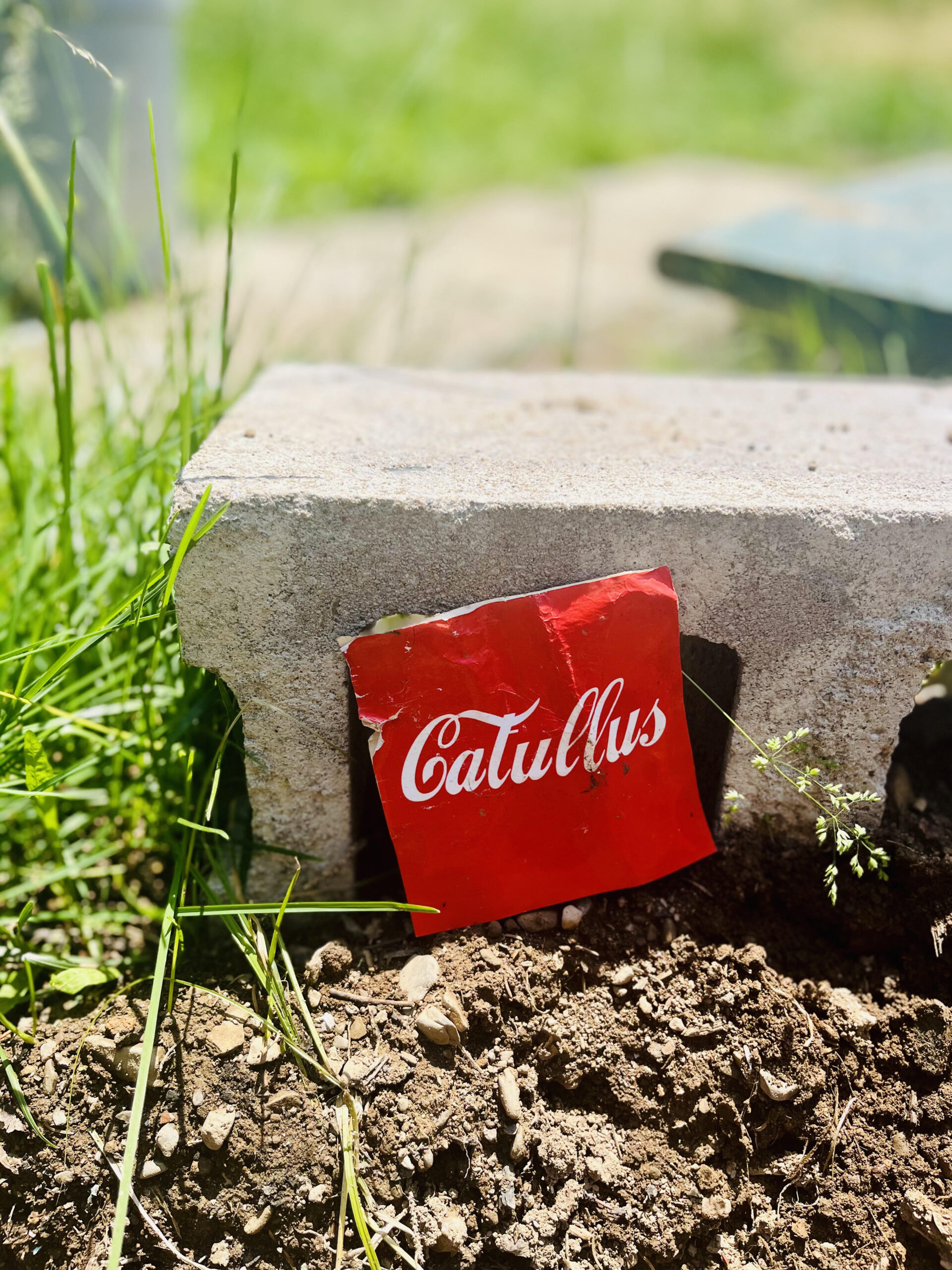
The final confrontation didn’t have any poetry to it. The message back from my spouse was as direct and flat as a line from Catullus: I don’t care if you live or die, and I’m tired of supporting you.
So I left.
I took one of our dogs, took the car, and drove to the cabin I had purchased using half of the inheritance my mother left behind when she died during the pandemic in Toronto. I never got to go to her funeral; I never got to say goodbye through the sterile glass of 2020. Instead, her absence was converted into two hundred and twenty thousand dollars, and within two years, the math of that survival fund had been completely eaten by the plumbing of a household. There was the twenty thousand dollars paid out for an provincial disability overpayment because I had tried to work while receiving assistance. There was the back tax on the only Canada Council grant I ever received. Another twenty thousand went into vehicles we needed to keep moving. The rest was sunk into the framing and drywall of a house I will soon no longer own, fixing up real estate that wasn’t mine to keep while my spouse improved career odds through a graduate program.
I spent eighty thousand on this cabin. If I hadn’t carved that money out when I did, I would have had nowhere to drop.
The Separation Inventory
- One two-bedroom cabin (Rural zoning, suburban sightlines)
- One dog (Tippy)
- One found coffee table (Sanded, awaiting a varnish stick)
- One primary school student desk (Two stools total)
- One hot plate, one toaster oven, one fridge
- No kitchen sink. No bathtub.
For a long time, the prize of my adulthood was the office. I had finally achieved it—working in a professional environment, promoting artists, organizing national events, moving across provinces because my salary demanded it. But the art industry is a Sisyphian joke. You do five hundred things for a creator and you get one and a half positive results because the media doesn’t care about a lyric when Starbucks is buying the full-page ad. The system is rigged to fail, and the burnout feels like a slow, high-sun rotisserie of the mind. When we moved east, the pay cuts became regular, a steady downward slope until mental illness and failing vision took over.
Now, at fifty-one, I understand the regular world is done with me. I am on welfare, and I think I am becoming more like Rufa every day. Maybe that’s okay.
Somewhere behind the walls, Rufa crouches in shadow, chewing slowly on the remnants of all my anxieties. She tastes the metal tang of worry, the soft pulp of shame. Every sip I defer, every thought I withhold, becomes her private meal. I’ve loved Catullus for thirty years now, since I discovered him at twenty-one in Montreal. I think of Poem 59—Rufa of Bologna, the stepmother, the woman chewing the bread she snatched off the funeral pyre, getting struck by the half-shaved tomb-burner when she reaches into the ashes.
That is the survival metric now. Scavenging the margins, living off what is left behind by the dead, surviving on the absolute edge of things while the respectable world watches from a distance.
On the windowsill sit tarot cards, thick and soft-edged from handling. One lies apart from the rest, face down. The radio murmurs at low volume, a voice speaking with institutional confidence. A coaster props one leg of the coffee table just enough to stop the wobble.
Voices from the Forum is brought to you by the National Historical Society.
Romans scented olive oil with myrrh, cinnamon, and iris root. Hair dye was made from walnut shells, vinegar, and lead. Information settles into the room like dust, indifferent to where it lands. Snow was stored in insulated pits called nivaria. Slaves were sent into the Apennines to harvest it, carrying it downhill to cool wine and preserve meat.
I live in that isolation now, relying heavily on the thought of old friends, even though I haven’t seen them in years. They are preserved in the amber of Toronto, left behind so they don’t get tangled in the darker terrain of this New Brunswick winter. The living room resembles a small museum of abandoned coping strategies. Ten battered paperbacks on raising “difficult” children lie collapsed in a heap, their titles reading like prop comedy for a doomed family play: The Problem Child. Rules for Raising Juvenile Delinquents. Parents Against Children.
Even Satan would decline credit for these books. Three bone-deep coughs tear through my chest. The house settles peacefully without interruption, entirely unconcerned with whatever it is us humans are doing.
The marriage didn’t end with a grand betrayal; it ended with a white Samoyed dog.
My spouse had just come back from an arts festival, carrying that distinct, aloof energy of someone who has spent forty-eight hours being an author while I stayed behind with the animals. We had this white wolf of a dog, a rescue that would turn and bite your wrist if you tried to clean its hindquarters. My spouse stood in the kitchen and insisted on a piece of impossible choreography: I was supposed to clasp the Samoyed’s snout shut with one hand, and use the other to pull the stuck feces from its long, woolly coat.
It was a setup. A magic trick that had never worked in all the years we owned the beast. But I said fine. I did it. The dog bit me, sharp and hard.
“Look at me,” I said, my hand bleeding over the linoleum. “I am such an asshole. I was right.”
My spouse didn’t say a word. They walked away. That was the last real conversation we had before the ultimatum the following morning. That night, I went upstairs in a panic, completely unstable, newly cut off from my medication because the local refills wouldn’t clear. I found them in the fetal position on the bed. When I asked for a hug, they screamed into the blankets. The next day, the vows were officially dead, and the division of shared assets began because of a shouty fight that was really just the fifty-sixth iteration of the same old wall. We did not like each other anymore. It was not an isolated crime. It was a mutual exhaustion.
When I first arrived at the cabin last summer, the anger was a physical weight. I burned our old wooden furniture in the backyard, watching the varnish crack and bubble in the twilight. I spent six hours a day with a crowbar, tearing down the sunroom—this damp, uninsulated hotel for mosquitoes, wasps, and ants. Part of me regrets the loss of the structure now, but the demolition gave my hands something to do between the moments I was screaming at the RCMP for conducting wellness checks I never requested, right before they put me in handcuffs for my own safety.
Now, the property has settled into a simulation.
If you look out the back, you see the three-quarter-acre lot stretching toward the highway, looking entirely rural. If you look out the front door, the house across the concrete road is a perfect, pristine bungalow, flanked by a grass field that looks like a manicured municipal park. It feels like an experimental desert where they used to test atomic bombs—a small, artificial planet set up to see if I could manage the parameters. Here is your tiny house. Here is your tiny internet. Here is your double-digit welfare check. Go to the gas station. Buy a energy drink. Mow the lawn.
So I do. I try online surveys with my low vision, clicking through screens for six cents an hour just to feel the mechanical hum of productivity. I sand the coffee table I found in the ditch. The dandelions have taken the front yard, hundreds of them, bright and aggressive. An online botanist told me they enrich the soil, that they carry medicinal properties if you dry the roots. I’m going to harvest them for teas and salads, turning the lawn into a small, witchy pharmacy.
The older I get, the closer I come back to that first childhood Halloween where I explicitly asked to be a witch. I used to be terrified of them—afraid of the strange, dark logic of people who lived on the edges of the village. But I see the utility in it now. If you become the witch, you don’t have to fear the dark anymore.
In my head, the different intellectual properties have acquired the imaginary rights to this separation and are fast-tracking it across streaming services. The CBC adaptation changes minor details for creative purposes—a sister here, growing up in Cleveland there, making my father a construction worker when in reality he was an insurance broker. It doesn’t matter. The point is that I have too much content in my head about this separation and how entirely unprepared I am for it. My parents are dead, my brother doesn’t talk to me, and my friends are thousands of miles away, wrapped up in their own lives.
I stand by the Saint John River with a three-dollar coffee I can’t afford, performing mental arithmetic I don’t believe in, trying to make the figures stop lying to me. But the math is rigged. A deficit here, a processing delay there—a series of subtractions that leave me standing in a cabin that is slowly becoming a raft. The power bill is a dull throb behind my eyes. Meanwhile, the foundation is taking on water—a slow, courteous invasion, as if the river doesn’t want to interrupt my crisis, but fully intends to win it.
I hadn’t arrived in Oak Point so much as I had aligned with something already waiting for me. The drive from the food pantry back to the cabin is a psychic gauntlet along Route 102 North: the deceptive sprawl of Public Landing, the suspicious, leaning houses of Lower Greenwich, and finally Browns Flat, where the atmosphere curdles and the road snaps over the knuckles of the hills. This is the conservative outskirts. A landscape of retired judgment.
My mental health has led to this demise; I’ve always known it would. But I’m quite fond of my mental illness—I can’t escape it, so I’ve learned to be entertained by it. Right now, I am in a period where I don’t belong anywhere. Like Rufa, reaching into the smoking embers while the town looks on, I am completely alone, and perfectly still.
Nathaniel G. Moore is a 51 year old Canadian writer living in rural New Brunswick. For 30 years I’ve been independently studying the Roman poet Catullus while slowly losing my mind and my life. I make weird videos all day on Youtube. I invented full contact bowling.