
The Hummingbird Hears the Piano’s Hooves, Rings the Rope of His Small Bell
by L. R. Anderson
June 28, 2026 | Poetry | Buried alive!
1
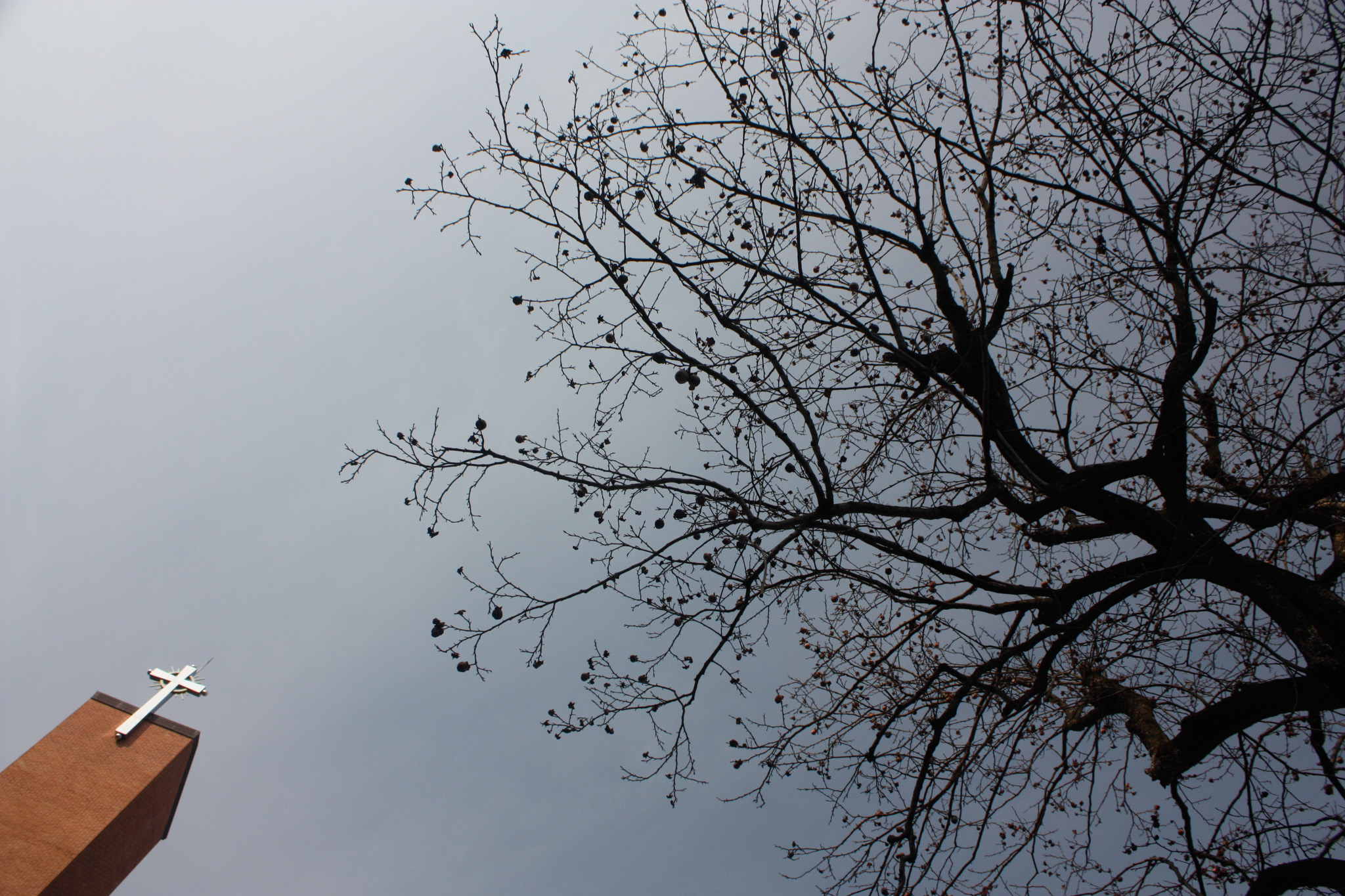
Grey sky stewing branches, straggly end of winter,
birds a dirty spattering, I took the bus to Sandomierz
on a Saturday. Cobblestones, bell towers, Kamienice
houses. Angular church aloof, all medieval brick
and stern windows. Inside, the clumpy smell of paper
and decay. It fell against me in dull wet thuds, like fists
of earth. Outside, men at tiny tables, cigarettes clinging
to their fingers gentle as moths. Alleys dappled by
women with high cheekbones, elegant as extras in
a movie. I was very proud of myself. I’d made it 20
minutes up the road from my apartment.
2
Sandomierz is quaint. Like it’s in a snow globe, unsold
on a shelf in a small town tourist shop, slanted light
shadowing its scaled-down streets. People have called it
home since the Neolithic. The Vistula flows past, on its
way north from the Carpathian mountains. It’s built for
beliefs. Franciscan reformers, Benedictine nuns,
Dominican monks. They planted its wine grapes, were
happily martyred on its green hills. During the Swedish
Deluge of the 17th century, four thousand grenades
exploded in its castle. Soldiers wearing different
coloured uniforms died in droves on its bridgeheads
in the heat of 1944. Youtube says it’s the murder
capital of Poland, exclamation point. I tell you this so
you can know, it’s a place where things happen.
3
Mongolian horses have big heads, bigger than regular.
They can canter and canter. I grew up on the prairies,
so I understand. Mongolians invaded Poland in the 13th
century. I don’t think they’d have been impressed with
my bus ride, even if I’d explained that I wasn’t sure how
to pay the fare and couldn’t speak Polish. Mongolia is
six thousand kilometres away, depending on how you
measure. That’s how far ruby-throated hummingbirds
migrate, all by themselves. They have to cross the Gulf
of Mexico, which can take 24 hours. I wonder if they
start to panic at hour eighteen, looking down and only
seeing water. I guess hummingbirds wouldn’t be
impressed with my bus ride, either.
4
Spiritual sickness used to be the cause of every kind
of ailment. Claustrophobia hadn’t been invented yet.
If you couldn’t breathe in small spaces, you weren’t
trusting God enough. Pray more. I played organ in a
Christian Scientist church for awhile. It was cozy and
fastidious. It smelled over-enthusiastically of cotton.
They read Mary Baker Eddy and the Bible, service after
service. The loudest singer was tone deaf. Underground,
I feel like a wound is trying to close over me. I have to
focus on my breath, hold onto my terror. It careens in
front of me, like the bunnies my dog chases. The same
inconsequential fact of disaster closing in.
5
In the year 1261, when Mongolian invaders camped
outside Sandomierz, it was Piotr Krepy who had the bad
luck of being in charge. Heavy wears the hat. He took a
deep breath and made himself walk over to strike a deal.
The Mongolians decided just striking was best. They killed
Piotr, either fast or slow, the internet wouldn’t say. Halina
Krempianka sat in Sandomierz, waiting for her dad, Piotr,
to come home, but, well. I’m sure that really hurt, even if it
was a long time ago and she didn’t have the internet or pod
coffee. Imagine people camped outside your home, having
a meal and a quick nap before standing up, stretching,
swinging steel straight into your lovely covering of skin
and muscle. Nowadays, people can get stuck at airports,
eat too much sugar. Ask the government to empty a
syringe into any available vein. Die stuffed with machines
at a hospital.
6
In movies, invading barbarians dress all in black. Women
scream in the background. Getting paid to scream is not
my dream job. Studies show that football teams in black
uniforms play more aggressively. Of course, Mongolians
didn’t consider themselves barbarians. They could wear
whatever colour they wanted. They’d been made by Tengri,
Giver of Life, God Over Everything, the Eternal Blue Sky.
He placed his Mongolians on those immense, open steppes
so they could ride forth and conquer the world. When they
die, the wind spirit comes to show their souls the way home.
It might help to remember that Tengri crafted the Universe
out of energy, indestructible as the tiny tardigrade. It might
help to remember that all of this is very far away.
7
Number 4 on the list of “How to Know If Your Sickness
Is Spiritual” is feeling abandoned by God. The internet
lists Number 3 as difficulty sleeping. This illustrates,
I believe, the challenge of trying to understand anything
with numbers. In a parallel universe, a hypochondriac
David Letterman is spending decades doing Top Ten
Medical Lists, and one night, he’ll do the symptoms
of spiritual sickness, and there will be a drum roll and
loud cheers at the end.
9
Halina Krempianka must have looked out from the hill
that Sandomierz is perched on many times. She could
kneel at the church, put her feet where I’d put mine. I’m
sure she prayed a lot. I wonder if she meant it. In 1287,
Mongolians rode up again, with their long, thin teeth
and their big-headed horses. Halina Krempianka
watched them come. She had time to time to about it.
She made her way to their camp outside of town. She
sat at their fires. She did this with her history bobbing
up all around her. My own people have cast me out,
she said. They are planning to hide and I can lead you
to them, she said. She wanted, and this is true, revenge.
10
I learned these things standing beside a bulkhead.
I’d been wandering the narrow streets, taking pictures
of pigeons. The ornate sign, in Polish and English,
explained that the doors I stood beside, now locked shut,
were openings to cellars that spidered under the town.
The cellars under Sandomierz are long, very long, longer
than you’d think. They could hold an army.
11
Taphephobia is the fear of being buried alive. It would
take until the late eighteenth century for Safety Coffins
to be invented, complete with windows and handy bells
that anyone stuck six feet under could ring. Frédéric
Chopin, famous Polish composer and pianist, was
tapophobic. He made thunderous, elemental piano
pieces, which sound like the hoofs of Heaven bearing
down on you. Chopin had his heart removed after he
died, to make sure he was good and dead when he got
buried. If I were to be buried, I wouldn’t want my heart
removed. I would want it to liquify into a great lake, so
that I could finally love all the things I’m supposed to.
12
Genghis Khan is a title. It’s not a name. Maybe you
knew that. King of Kings. When the Universal Ruler
was a squishy baby, he was called Temüjin. He made
the biggest contiguous land empire ever, and fun
fact, believed in religious freedom. He fathered scads
and scads of children. I watched a documentary once
about more than fifty fertility doctors who made hordes
of children by using their own sperm to impregnate
clients. Those doctors didn’t created empires of any
kind. They were too busy being gross.
13
Halina Krempianka lead the sabre-carrying warriors,
with their long, thin teeth, down the steps like ducklings.
Along the cellars that monks had made, along the dark
passageways, Earth covering over them, the sky lost.
The Mongolians were maybe delighting in the surprised
terror they would soon see, when they would emerge
into the light to kill anyone they wanted. Weapons ready,
all suited up.
14
While Halina and the invaders burrowed under the city,
the good people of Sandomierz crept up to the very
bulkhead I stood beside. They worked together to place
boulders and heavy rocks in the entrance. They moved
fast, encouraging each other with whispers, eager hands.
They swung the doors up and shut, barricading them.
The invaders didn’t know it, but they were already dead.
They’d walked themselves into their own dark grave.
The dangerous men and Halina Krempianka, in there with
them. Knowing even as she’d lead them down each step,
there was, there would be, no way out.
15
Imagine a woman, slight as a hummingbird, turning.
Imagine her from a great distance. Facing her, a dense
hunk of army about to fracture. Imagine the swing of a
brown skirt, her back from behind, like in a movie. How
angry the men would’ve been. How scared. The long
moment it would take for them to realize they’d been
severed from the blue sky, the slow sun. What those men
would’ve done to that woman. The painful death that had
arrived for them. Like rats poisoned in a garage.
The excruciating hours.
16
On the day I visited, Sandomierz seemed peaceful and
sleepy. It was the beginning of spring, like I mentioned
earlier. Even the sky seemed happy. It’s taken me years
to imagine triumph, not terror, in Halina Krempianka’s
eyes. To put a knife in her hand. To let her use it.
L. R. Anderson was born on the prairies and now lives on the traditional territory of the Snuneymuxw First Nation, Vancouver Island. She recently completed her MFA in Creative Writing at the University of British Columbia.
wow.