
Measures of Harm
by M.J. Rose
June 7, 2026 | Fiction | Surprised, Alarmed
I didn’t start out with something as convenient as language at my disposal; I don’t know that I could even claim to have experienced thought. There was only instinct, a hunger for continuation at costs I didn’t understand.
While I was singular once, this intrinsic need to carry on led to becoming much more. It wasn’t long before my numbers were beyond anything I ever dreamed—had I known to dream. My existence was ensured.
I lived in a man who worried day and night about debts, in a woman who spent hours keeping up appearances, in an elderly man already near death. My operation was quick—not for the benefit of these individuals, but I came to see it that way in retrospect.
This, of course, was wishful thinking. What I inflicted wasn’t beneficial for the man just made a grandfather, or the woman with the wedding dress in her closet.
If I was anything, I was efficient. Kidneys seized, fluid piled up, and blood thickened with waste that could no longer be filtered out. Thoughts dissipated as perception dulled to nothing. By the third day the body was finished.
They gave me a name before I understood that all things had one—a collection of sounds to indicate what I could do to them. Alongside this term grounded in their sciences, they also deemed me a monster. I had no precedent for the word.
Lives passed me by, dozens and even hundreds in a single day. These beings, with all their rules and arbitrary notions, fascinated me. I learned to think as they did, to embellish my consciousness with words the way they did; it helped me understand them, and myself.
But my comprehension was like a drop in the ocean until I came upon her. When I first entered, I was not made to feel unwelcome; no inflammation flared and no fever rose. Her blood moved steadily past me as if it hadn’t even noticed my arrival. Did this body lack the will to fight me as the others had? Was this woman so keen to die that even her cells would allow me to move unchecked?
I realized soon this wasn’t the case.
For the first time in a new bloodstream, I had no effect. It wasn’t as though there was a switch I had forgotten to flip; my presence had always been enough. But here, I was inconsequential.
I didn’t know what this meant, but somewhere within my instincts I was told to move on. One life I had failed to take was nothing against the thousands I had claimed and the millions I could. However, the problem with learning was its gluttonous nature—now that I knew some, I wanted to know all, and I wanted to know her.
It wasn’t long before the others found out about the woman who could not be killed by me. When she was first brought in for testing, pride surged through her body. She could be the key to saving many lives, and this excited her more than anything had since I arrived.
They were trying to stop me, but I found their potential success difficult to believe. Spreading was my natural inclination, something I had reduced to a simple formula that I performed without thought.
They took the woman’s blood, hair, saliva, then sent her on her way. Only a day later,
she was asked to return; there were more samples to be had.
She would later wish she hadn’t come back.
With each blood let, she was told what good she was doing for the world. They took from her inner elbows, the backs of her hands, even the tops of her feet, before introducing what one doctor called a central line. Now they could keep taking without sticking a needle in another new place.
I couldn’t understand it, so I watched in case I one day would. They took from this woman in an effort to protect lives. But weren’t they, where I had failed, draining hers? Did this woman matter less than the others? Maybe some humans were more important. I hadn’t figured out a rhyme or reason to this judgement.
Outside the lab where they held her, I infected more. It grew harder as the days passed—quarantine. This didn’t stop me, only slowed me down. Because if I had learned anything about humans, it was that they yearned for one another, whether that was grounded in love, hatred, or even the most basic need of their species to be noticed, they always found a way to see each other.
The woman, however, stole my attention in ways nothing else had. My focus continued to unfold, expanding as I moved through more people. But in the end, it was always her. She was emaciated, barely able to stand on her own. They fed her a beige liquid through a tube, but it couldn’t keep pace with what they took. The woman was fading, and with her, the once ambiguous nature of my morality.
On one hand, I didn’t do this. I killed, yes, but the suffering I caused was brief. Coma always came before the end did, and it was over before anyone could ask me for mercy. Was that what I believed death was? Mercy? I hadn’t considered it much, despite how often I brought it to doorsteps.
I continued to evolve. The airborne nature of my travel was being thwarted by careful precautions, but what if I could live on surfaces instead? Traveling from human to human on a
cup or a pant leg?
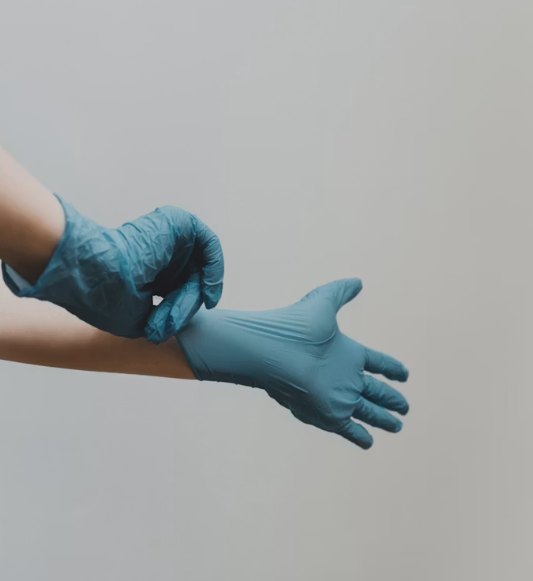
In my first targeted attack, I killed one of the researchers holding her in a suspended version of life. Then another. If none were left, then they would be forced to stop. The researchers inferred what I had done too quickly. Hands were cleaned more thoroughly than ever, hazmat suits were donned, and nothing left her room without extensive sanitization. The dead were replaced. I tried again, but each failure only refined their defenses. I began to understand the scale of what I faced. I could kill individuals; I could not dismantle a system. It adapted and justified itself with the same logic I had always used. This is what it takes to live.
Despite the woman’s silent fantasies of release, her mind disciplined itself into acceptance. She told herself this rationality was sound, that her body was meant to be spent for outcomes larger than herself. That if she endured long enough, the harm might retroactively become purpose. Because if she stopped, then what would it all have been for? My constant urge to spread slowed. What was this for, indeed.
In the coming days, the researchers spoke of progress as my spread quieted considerably. The curves on the charts they loved to gather around flattened. The credit went to their intelligence, their refusal to stop until an answer was found.
I paid them little notice. Instead, I watched her mind.
She thought often of the others I had affected, especially the children. There had been one close to her who died because I endured. The pain ran deeper than any physical harm I had inflicted, sinking into the marrow of her bones. Her agony was sharpest when she thought of the bear, a toy she had given him that he kept through the duration of his illness, clutched in his hands even when his eyes closed, never to reopen.
It was difficult to watch further.
Where I once resisted their procedures, I now waited obediently behind the barriers they erected. I thinned more each day, leaving behind remnants that behaved like echoes rather than
agents. Recovery rates rose and they narrated my ending into infamy.
When victory was announced, they debated how to include her in the narrative. Her name was weighed against liability. The image of her they presented to the world softened, now anonymized.
“A courageous individual,” the spokesperson said. “A true hero.”
She was moved to a new, warmer room. A doctor spoke gently of discharge, of monitoring, of long-term changes. The phrasing remained careful.
“Some effects may persist,” the doctor said.
Persist was another word for permanent.
She nodded numbly. Even without me, she would carry this in her nerves, her blood, and—worst of all—her memory.
On the day she left, she shuffled down a corridor she hadn’t seen in months. Someone handed her a folder with numbers to call and instructions to follow, impersonally listed. I dissolved into harmlessness, into the celebrated absence they would later call, with a pat on their own backs, eradication. They never would fathom that the monster had learned benevolence.
Somewhere beyond my reach, the woman lived on—applauded by few, changed irrevocably. The system remained, already preparing for the next hunger it would justify.